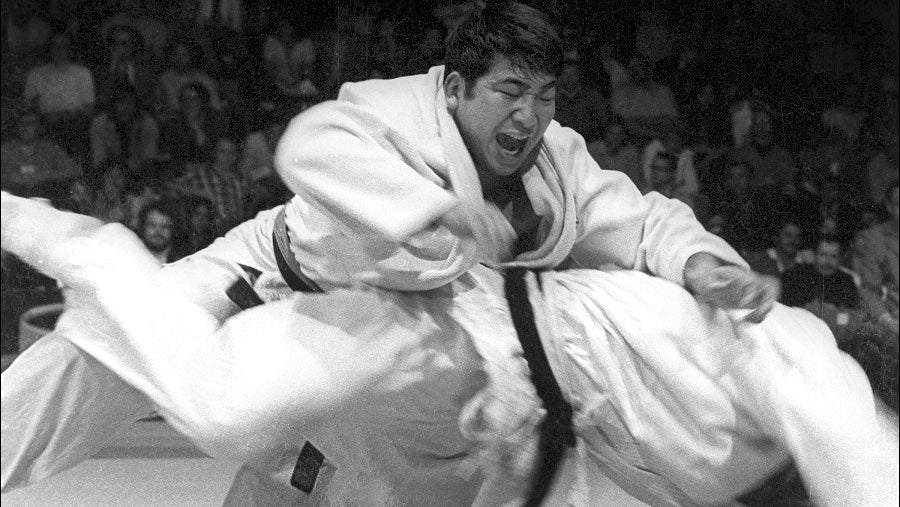
Brazilian judo is mourning the loss of one of its greatest pioneers. Chiaki Ishii, the Japanese-born judoka who won Brazil's first World Championship medal in 1971 and its first Olympic judo medal at the Munich Games in 1972, passed away on 16 October 2026 at the age of 85.
Ishii came from a judo family. His grandfather had received his sixth dan from Jigoro Kano, the founder of judo.
He began training at a young age in a dojo close to his home and later studied at Waseda University, which is known to have a strong judo program. His ambition was to represent Japan at the 1964 Olympic Games in Tokyo, where judo would make its Olympic debut.
However, he lost his opportunity to Isao Okano, who went on to become Olympic champion. The disappointment was considerable, and Ishii decided to seek a different future.
Ishii emigrated to Brazil, undertaking a journey by ship that lasted approximately 60 days. His original intention was not to become a judo champion or teacher, but to work as a farmer.
He settled in a Japanese Brazilian community in São Paulo, where he began working in agriculture. However, his life would take an unexpected turn.
When he took part in a local judo tournament, just for fun, Ishii demonstrated technical abilities that immediately impressed those watching. Members of the community persuaded him to begin teaching judo, and he gradually returned to the sport he had once decided to leave behind.
Ishii became a naturalised Brazilian citizen in 1969, opening the way for him to represent his adopted country internationally.
His impact was immediate. At the 1970 Pan American Championships in Londrina, he won gold medals in both the -93kg and Open categories, establishing himself as one of the leading judoka on the continent.
The following year, Ishii made history at the World Championships in Ludwigshafen, West Germany, where he captured bronze in the -93kg category. It was the first World Championship medal ever won by a Brazilian judoka.
He returned to the Pan American Championships in Buenos Aires in 1972 and again claimed two gold medals, winning both the -93kg and Open categories.
At the 1972 Munich Olympic Games, Ishii represented Brazil in the -93kg division and won a bronze medal, making him the first Brazilian judoka to win an Olympic medal.
Even in later life, Ishii maintained his connection with competition. In 2016, at the age of 75, he became a World Veterans Champion in Fort Lauderdale, demonstrating his enduring passion for the sport.
Ishii's greatest contribution to Brazilian judo may be what he did after his competitive career was over. He established the Associação de Judô Ishii in São Paulo, where he helped develop generations of Brazilian athletes.
His dojo became an important centre for competitive judo. Among those associated with his teaching were future Olympic medallists Walter Carmona, who won bronze at the 1984 LA Olympics, and heavyweight Rafael Silva, who went on to win Olympic bronze medals in London 2012 and Rio 2016.
Ishii's legacy was recognized internationally. In 2018, he received the Order of the Rising Sun, Silver Rays, from the Japanese government, acknowledging his contribution to the development of judo and the relationship between Japan and Brazil.
He had three daughters, Tânia, Luíza and Vânia, all of whom became judo black belts.
Tânia Ishii represented Brazil at the 1992 Olympic Games in Barcelona. She married American judoka Mike Swain, the 1987 World Champion. Vânia competed in two Olympics, Sydney 2000 and Athens 2004.
As a judo pioneer and coach, he helped develop athletes, establish a competitive tradition and inspire generations of Brazilian judoka. Ishii never represented Japan at the Olympic Games, but he helped another nation discover its Olympic future.
(Photo by David Finch)